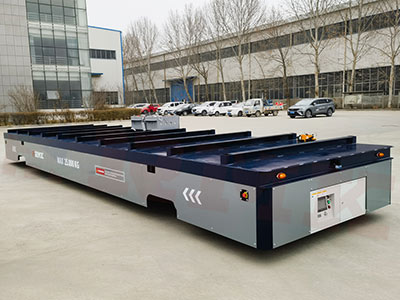
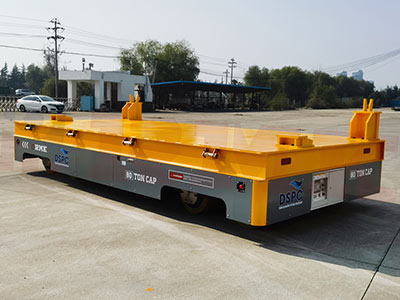
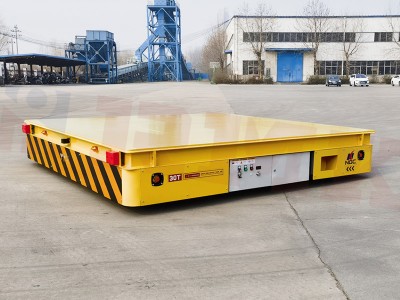
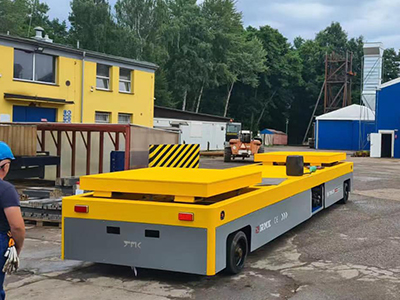
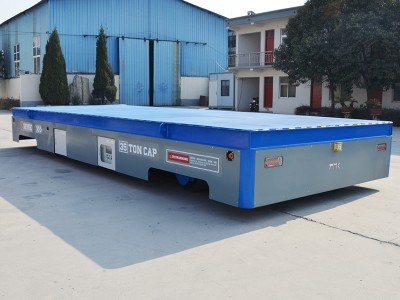
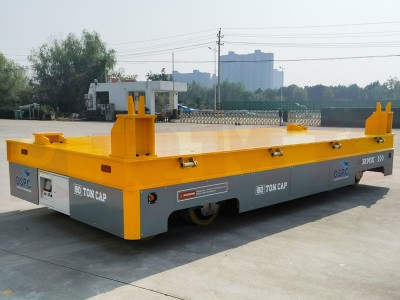
Humanistic Customized
However, selecting an industrial transfer cart is not simply a matter of choosing a vehicle based on the weight of the load.
A transfer cart suitable for actual factory operations must also meet requirements related to load dimensions, center of gravity, travel routes, floor conditions, operating frequency, power supply, and loading and unloading processes.
For example:
Steel coil transportation requires consideration of the cylindrical shape of the load and the risk of rolling. Dedicated support structures are usually designed according to the specifications of the steel coils.
Large mold transportation requires careful consideration of the mold's bottom support positions, center of gravity, and loading and unloading methods.
Transformer component transportation requires customized load platforms based on the dimensions, weight distribution, and support requirements of different components.
Heavy material transportation between multiple production stations requires particular attention to vehicle maneuverability, aisle width, and positioning accuracy.
Improper selection during the initial planning stage may result in problems such as insufficient turning clearance, excessive wheel wear, inadequate battery runtime, or failure to meet on-site safety requirements.
So, what should manufacturers confirm before purchasing an industrial transfer cart? How should they choose between rail-guided and trackless transfer carts? How should battery power, rail power supply, and automated control systems be configured?
This guide explores the major selection criteria, eight key technical parameters, and practical equipment applications to help manufacturing companies develop a more suitable purchasing plan based on their actual material handling requirements.
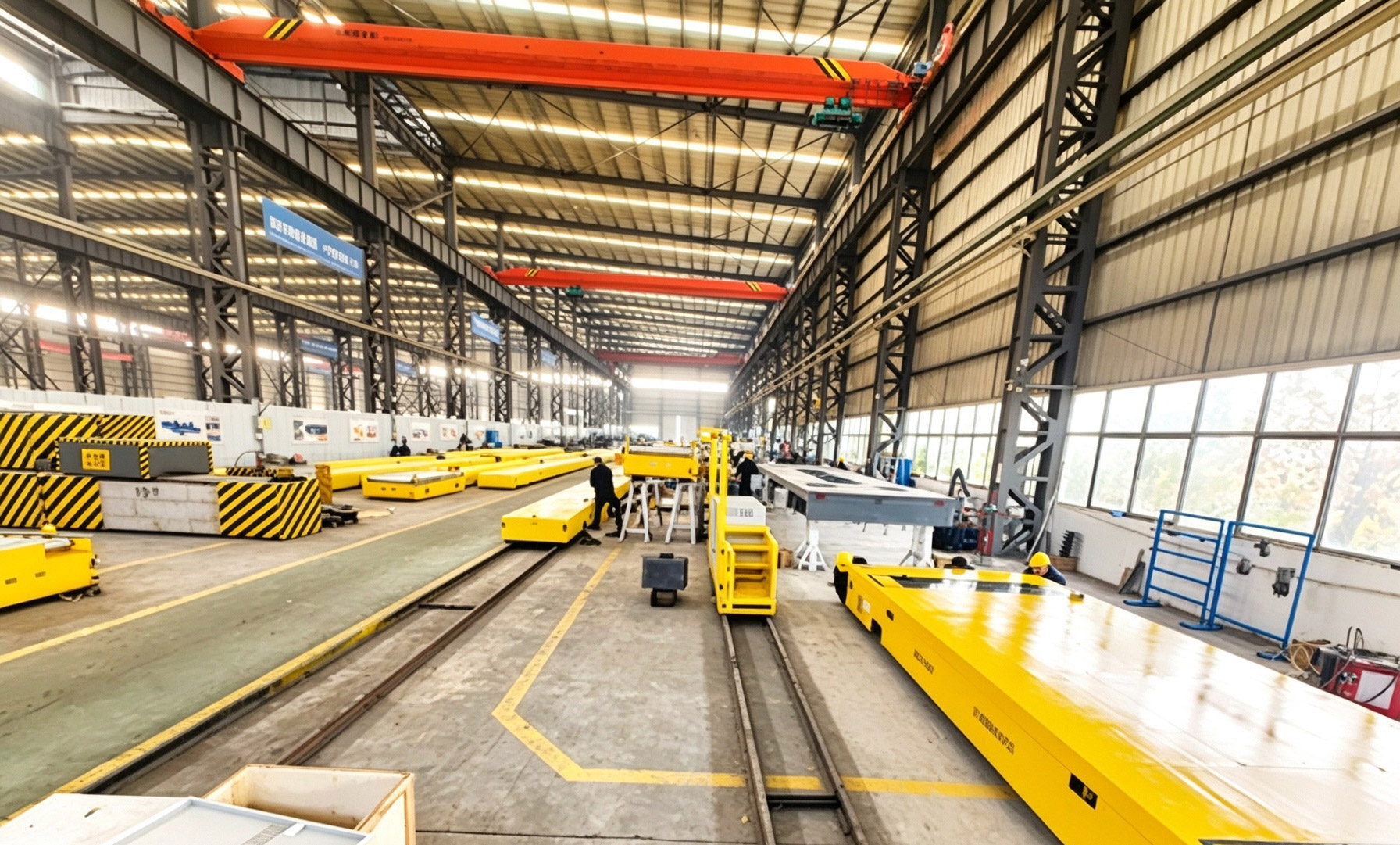
Before Selection: Identify Your Factory's Material Handling Requirements
The following information should be collected:
- What types of materials need to be transported?
- What is the maximum load weight?
- What are the dimensions of the workpieces?
- Is the transportation route fixed, or does it involve multiple workstations?
- How many hours will the transfer cart operate each day?
- Does the transfer cart need to communicate or coordinate with production equipment?
Different Materials Require Different Platform Designs
1) Steel Coil Transportation
Steel coils have a cylindrical shape, so the risk of rolling must be carefully considered during transportation.
Depending on the coil diameter, width, weight, and loading and unloading method, a V-shaped support frame or another customized positioning structure can be designed to prevent the load from shifting during transportation.
2) Large Mold Transportation
Large molds typically have considerable weight and specialized bottom structures.
When designing the load platform, it is necessary to identify the mold's bottom support positions, center of gravity, loading and unloading method, and positioning requirements. Customized support fixtures may be installed when necessary to ensure stability during transportation.
3) Transformer Component Transportation
Transformer components, including cores, coils, and large transformer tanks, may differ significantly in dimensions, weight distribution, and support requirements.
The load platform should therefore be designed according to the specific workpiece rather than determined solely by the rated load capacity.
For this reason, equipment selection should not be based on load capacity alone. Cargo weight, center of gravity, support positions, and load distribution are equally important engineering considerations.
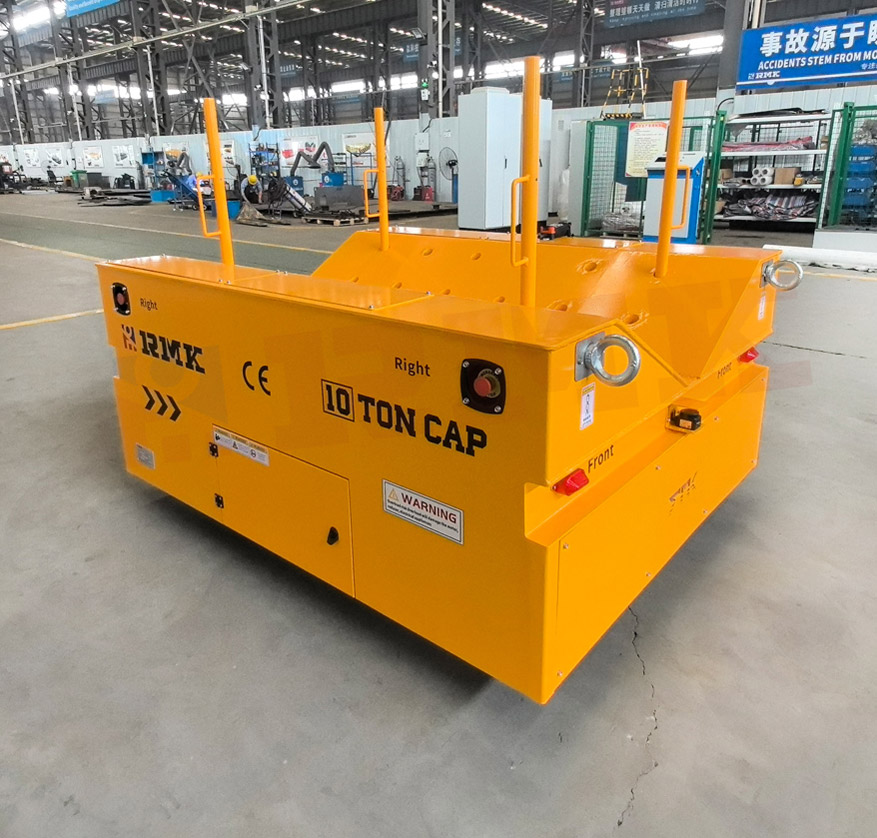
10-Ton Customized Transfer Cart for Steel Coil Transportation
Rated Load Capacity: 10 Tons
Dimensions: 1800 × 1500 × 920 mm
Control Method: Wireless Remote Control
Steering Method: Differential Steering
Customized Configuration: Saddle-Type Support Platform
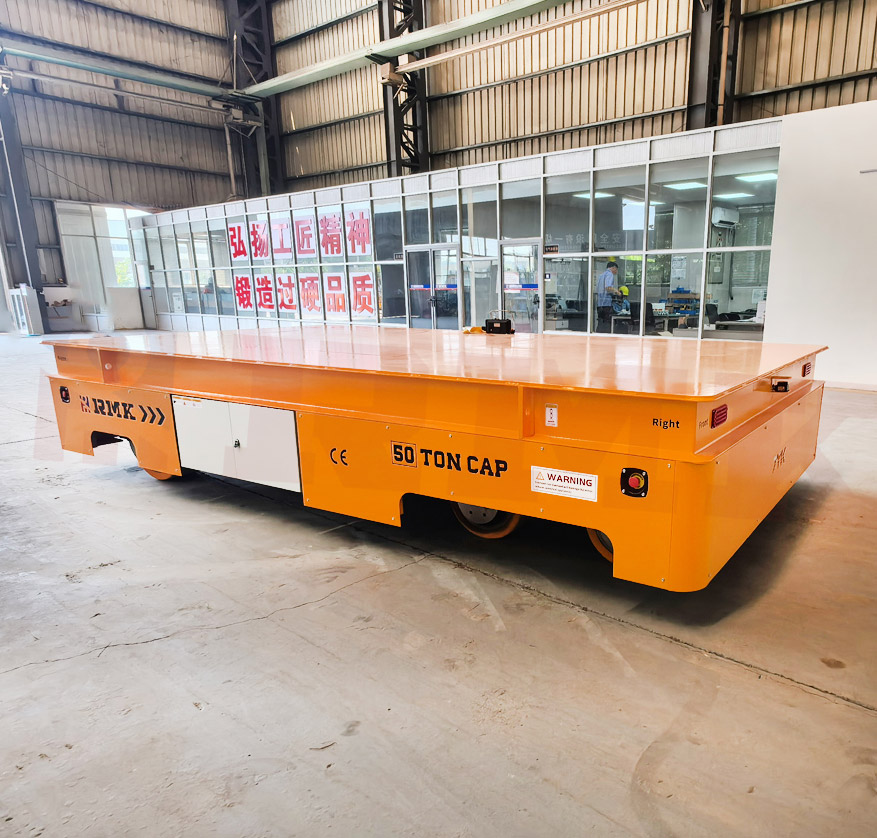
50-Ton Heavy-Duty Trackless Transfer Cart for Mold Transportation
Rated Load Capacity: 50 Tons
Dimensions: 6200 × 2700 × 700 mm
Control Method: Wireless Remote Control
Steering Method: Dual Hydraulic Steering System
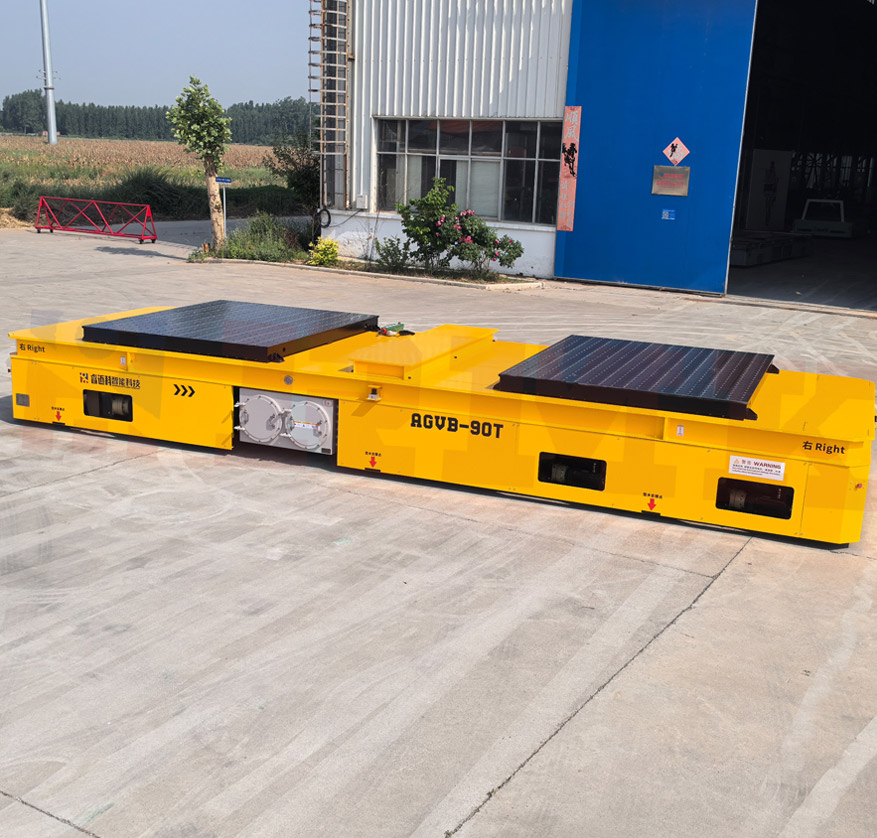
90-Ton Explosion-Proof Omnidirectional Electric Transfer Cart / AGV
Rated Load Capacity: 90 Tons
Dimensions: 8000 × 2600 × 900 mm
Control Method: Wireless Remote Control
Steering Method: Steering Wheel Drive System
Additional Configuration: Explosion-Proof Vehicle Body and 100 mm Full-Platform Lifting System
Four Key Selection Dimensions for Industrial Transfer Carts
Operating mode, power supply, control and automation, and additional functions are independent design dimensions. A single transfer cart may combine rail-guided operation, battery power, hydraulic lifting, and wireless remote control.
Understanding these four dimensions helps avoid confusing different technical concepts during equipment selection.
Operating Mode: Rail-Guided or Trackless
Industrial transfer carts are primarily divided into two types: rail-guided and trackless transfer carts.
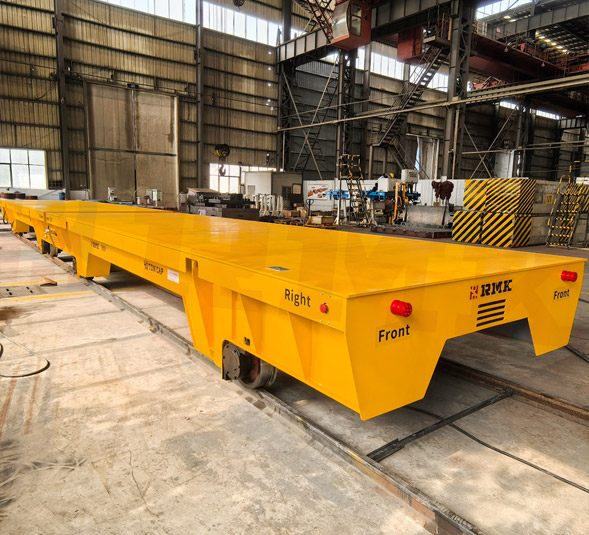
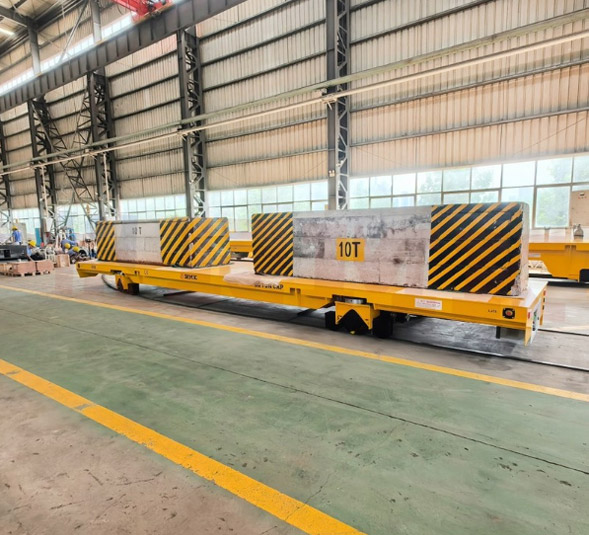
Rail-Guided Transfer Carts
Rail-guided transfer carts travel along pre-installed steel rails. They are suitable for industrial applications with fixed transportation routes and highly repetitive material handling tasks.
When selecting a rail-guided solution, the following factors should be considered:
Rail foundations and installation conditions;
Rail gauge and track layout;
Transportation starting points and destinations;
Turning, crossing, and directional change requirements;
Whether future production layout adjustments are expected.
Trackless Transfer Carts
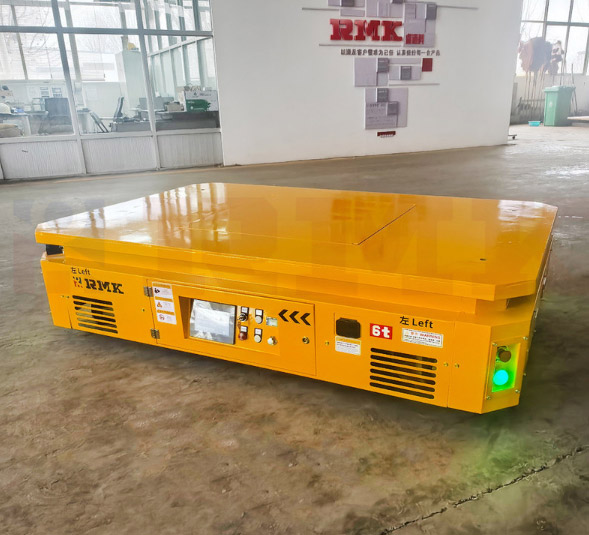
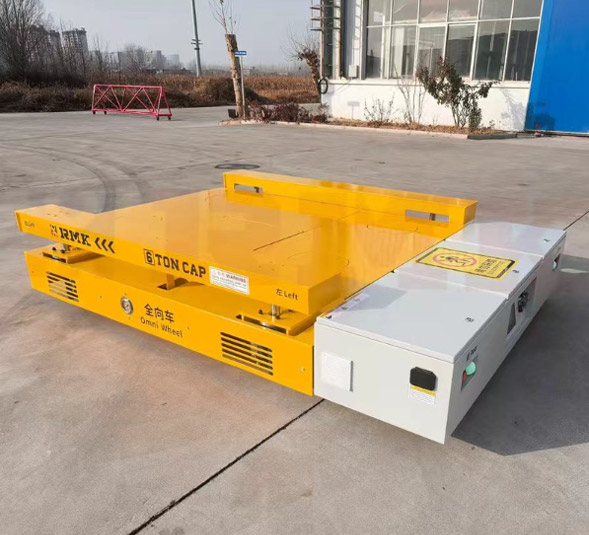
Trackless transfer carts do not require fixed rails. Instead, they travel directly on factory floors using wheels, drive systems, and steering mechanisms.
Depending on the steering configuration, these vehicles can move forward, backward, and turn. Some omnidirectional models can also move laterally, diagonally, or rotate 360° in place.
Trackless transfer carts are suitable for:
Transportation tasks involving multiple workstations;
Factories where production layouts may change;
Facilities where installing fixed rails is impractical;
Applications requiring flexible route adjustments according to workpiece locations.
It is important to note that trackless operation does not mean a vehicle can operate on any floor surface. Floor load-bearing capacity, flatness, slope, and traffic conditions must still be evaluated through engineering assessment.
Power Supply: Choosing the Right Power Configuration for Your Operating Requirements
Power supply and operating mode are two independent selection factors.
A rail-guided transfer cart does not necessarily need to receive power through the rails. Different power supply configurations can be selected according to the equipment design and specific project requirements.
Common power supply methods include:
1) Battery Power Supply
An onboard battery supplies power to the vehicle's drive and control systems.
This configuration is suitable for applications where connection to a fixed power source is inconvenient and greater flexibility in transportation routes is required.
2) Cable Reel Power Supply
An external power cable is wound and unwound by a cable reel to supply electricity to the transfer cart.
This configuration is suitable for applications where the cable can be properly managed and the travel route meets the requirements for cable deployment and operation.
3) Low-Voltage Rail Power Supply
A dedicated low-voltage power rail supplies electricity to the transfer cart through a current collection device.
This configuration is suitable for specially designed rail-guided transportation systems.
4) Conductor Bar Power Supply
The transfer cart receives electricity from a fixed conductor bar system through a current collector.
This method is suitable for industrial applications that meet the corresponding installation and operating requirements.
Different power supply methods have different installation requirements, operating distance limitations, maintenance requirements, and application constraints. The appropriate configuration should be selected according to the specific project conditions.
Important Note: REMARKABLE's trackless transfer carts are powered by onboard batteries, allowing them to operate without a fixed external power connection. This is one of the key factors enabling flexible route planning and operation.
Evaluating Battery Capacity Based on the Actual Duty Cycle
Battery configuration should not be determined solely by battery capacity (Ah). Instead, it should be evaluated based on the actual operating duty cycle, including:
- Cargo weight and load distribution;
- One-way and round-trip travel distances;
- Number of starts and stops per hour;
- Operating time under full-load and no-load conditions;
- Floor rolling resistance and gradients;
- Available charging time.
For example, two transfer carts traveling the same distance may have significantly different energy consumption due to differences in load capacity, start-stop frequency, and operating conditions.
Therefore, when requesting battery runtime data from suppliers, buyers should ask for the specific test conditions, including test load, operating duty cycle, floor conditions, and testing methods, rather than comparing battery capacity or runtime figures under ideal conditions alone.
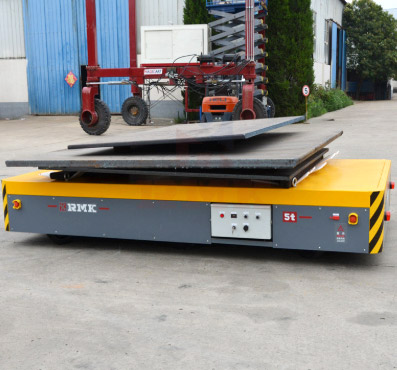
Battery-Powered Trackless Transfer Cart
Available battery options include maintenance-free batteries, lithium batteries, explosion-proof battery systems, and high-temperature-resistant batteries.
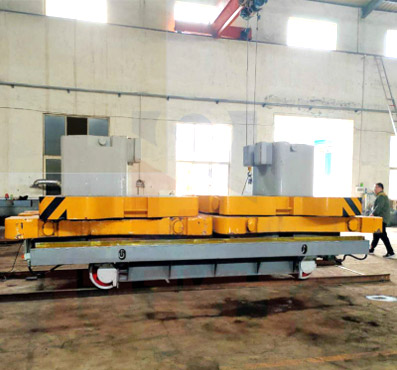
Cable Reel-Powered Electric Transfer Cart
Rail gauge, platform dimensions, and rated load capacity can be customized. Imported and domestically manufactured industrial wireless remote control systems are available as optional configurations.
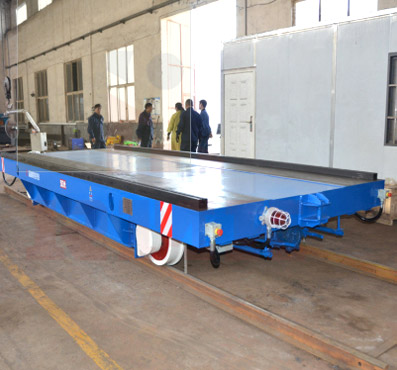
Trailing Cable-Powered Electric Transfer Cart
Hydraulic lifting system is available.This power supply method provides continuous external power without battery capacity or runtime limitations.
Applications: Mold workshops, underground mines, construction projects, aerospace, water conservancy, and other industrial applications.
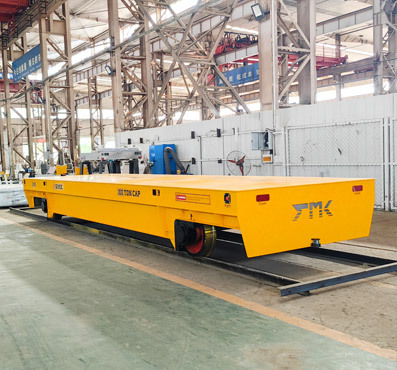
Conductor Bar-Powered Electric Transfer Cart
100-Ton Steel Coil Transfer Cart with Low-Voltage Rail Power Supply.
Applications: Steel manufacturing, mining, ports and terminals, and large-scale manufacturing facilities.
Control Methods and Automation Configuration
The control method depends on the role of the transfer cart in the production process and the level of automation required.
It is important to distinguish between manual control, PLC-based control, and automated material handling systems. These represent different control and automation configurations rather than three successive levels of automation.
1) Manual Control
Operators control the transfer cart using a wired pendant or wireless remote control system.
This method is suitable for applications requiring direct operator intervention, flexible transportation routes, or operations that do not require automated dispatching.
2) PLC-Based Control
A PLC (Programmable Logic Controller) can coordinate equipment operations, execute predefined operating sequences, implement interlocking controls, and exchange signals with other production equipment according to the project design.
For example, a transfer cart can perform specific actions based on the operating status of an overhead crane, production line, or workstation.
However, PLC-based control does not automatically mean that the vehicle has autonomous navigation capabilities.
Depending on the project requirements, a PLC can coordinate specific equipment functions, execute predefined operating sequences, and manage interlocks between different devices.
3) AGV and RGV Systems
AGVs (Automated Guided Vehicles) typically use laser navigation, magnetic navigation, or other guidance technologies to travel automatically along predefined routes or in response to dispatch commands.
RGVs (Rail Guided Vehicles) travel along predefined tracks and are commonly used for automated material transportation on fixed routes.
AGVs and RGVs are not mutually exclusive concepts. AGV refers to automated guided vehicle operation, while RGV emphasizes rail-guided transportation.
Automated material handling project should also address the following requirements:
- Navigation and guidance methods;
- Positioning accuracy;
- Obstacle detection;
- Communication interfaces;
- Traffic management and vehicle coordination;
- Integration with production management systems;
- Emergency stop functions and fault-handling mechanisms.
For driverless industrial trucks and their systems, manufacturers can refer to ISO 3691-4:2023, Industrial Trucks — Safety Requirements and Verification — Part 4: Driverless Industrial Trucks and Their Systems.
However, this standard does not apply to every type of industrial transfer cart. Specifically, it excludes trucks guided solely by mechanical means, such as rails or guides, as well as trucks controlled solely by remote operators rather than operating automatically.
Therefore, when purchasing automated material handling equipment, buyers should identify the applicable safety standards according to the actual vehicle structure, guidance method, and operating mode rather than assuming that the same standard applies to all transfer carts.
Additional Functions and Customized Structures
In addition to the basic drive and steering systems, industrial transfer carts can be equipped with various functions and customized structures to accommodate different load characteristics and loading and unloading requirements.
Common configurations include:
- Hydraulic lifting platforms;
- Roller conveyor platforms;
- V-shaped supports for steel coils;
- Clamping and positioning devices;
- Weighing systems;
- Customized load platforms;
- Special configurations for harsh operating environments.
For example:
If a transfer cart needs to connect production stations at different heights, a hydraulic lifting platform may be required to facilitate vertical material transfer.
If materials need to be transferred directly between the cart and a production line, a roller conveyor platform may be a suitable solution.
The specific functions and structural configurations should be designed according to the load dimensions and characteristics, loading and unloading equipment, and actual production processes.
Eight Key Technical Parameters to Confirm Before Purchasing
The previous sections have introduced the fundamental principles of industrial transfer cart selection. During the procurement process, suppliers need detailed technical information to determine the appropriate vehicle configuration and prepare an accurate quotation.
Ideally, buyers should prepare the following eight categories of information before submitting an inquiry.
| Evaluation Criteria | Key Information to Confirm | Key Selection Considerations |
| Maximum Load Weight and Rated Load Capacity | Workpiece weight, pallet/tooling weight, support structure weight, and the weight of any additional components transported together. Calculate based on the maximum total load, not the average weight. | The frame, wheels, drive system, and load distribution must all be verified through engineering calculations. Do not rely solely on the motor's nominal tonnage rating. |
| Load Dimensions and Center of Gravity | Overall length, width, and height; bottom support points; center of gravity; load distribution; potential off-center loading; and loading/unloading methods. | Steel coils may require V-shaped supports, while large components such as transformers may need customized load platforms. Platform dimensions should be designed according to actual requirements; a larger platform is not necessarily better. |
| Travel Routes and Turning Space | Starting and destination points, one-way travel distance, aisle width, turning areas, floor gradients, floor joints, and indoor/outdoor transition areas. Provide a factory layout drawing where possible. | For trackless transfer carts, verify turning capability under full-load conditions. If lateral movement, diagonal travel, or in-place rotation is required, select an appropriate steering configuration. |
| Factory Floor Conditions | Floor material, load-bearing capacity, flatness, joints, gradients, and indoor/outdoor transition areas. | Floor conditions influence wheel selection and the drive configuration. Floor defects can directly affect the operating stability of trackless transfer carts and wheel service life. |
| Operating Hours and Transport Frequency | Daily operating hours, one-way and round-trip distances, continuous or intermittent operation, and available charging and maintenance windows. | These factors determine motor, braking system, and battery capacity requirements. Solutions for intermittent material handling can differ significantly from those designed for continuous multi-shift operation. |
| Operating Environment | High temperatures, dust, moisture, corrosive conditions, and hazardous-area classifications. For explosion-proof applications, confirm the zone classification, type of hazardous substance, temperature class, and equipment category. | Standard equipment may require additional environmental protection. Explosion-proof applications require a systematic assessment of the complete vehicle. An explosion-proof individual component does not mean the entire vehicle is explosion-proof. Refer to ATEX Directive 2014/34/EU where applicable. |
| Control and Automation Requirements | Wired pendant control, wireless remote control, PLC-based control, automatic positioning, automatic navigation, obstacle detection, integration with production lines or factory MES systems, communication interfaces, and fault-handling logic. | Define communication protocols and integration requirements in advance to avoid compatibility issues during subsequent modifications or integration with existing automation processes. |
| Loading/Unloading Methods and Special Functions | Height differences between workstations, production line integration requirements, material types, and weighing or data-recording requirements. | Configure auxiliary equipment according to actual needs, such as hydraulic lifting platforms, roller conveyor platforms, V-shaped supports, positioning fixtures, and weighing systems. Prioritize compatibility with existing loading and unloading processes. |
Before determining the platform structure, the entire material loading and unloading process should be evaluated, rather than selecting the transfer cart based on the vehicle itself alone.
Industrial Transfer Cart Applications and Project Cases by REMARKABLE
REMARKABLE provides customized material handling equipment based on load weight, travel routes, floor conditions, and production processes. Our solutions include rail-guided transfer carts, trackless transfer carts, and other customized heavy-duty material handling equipment.
Case Study 1: 160-Ton Omnidirectional Transfer Cart with Differential Steering System
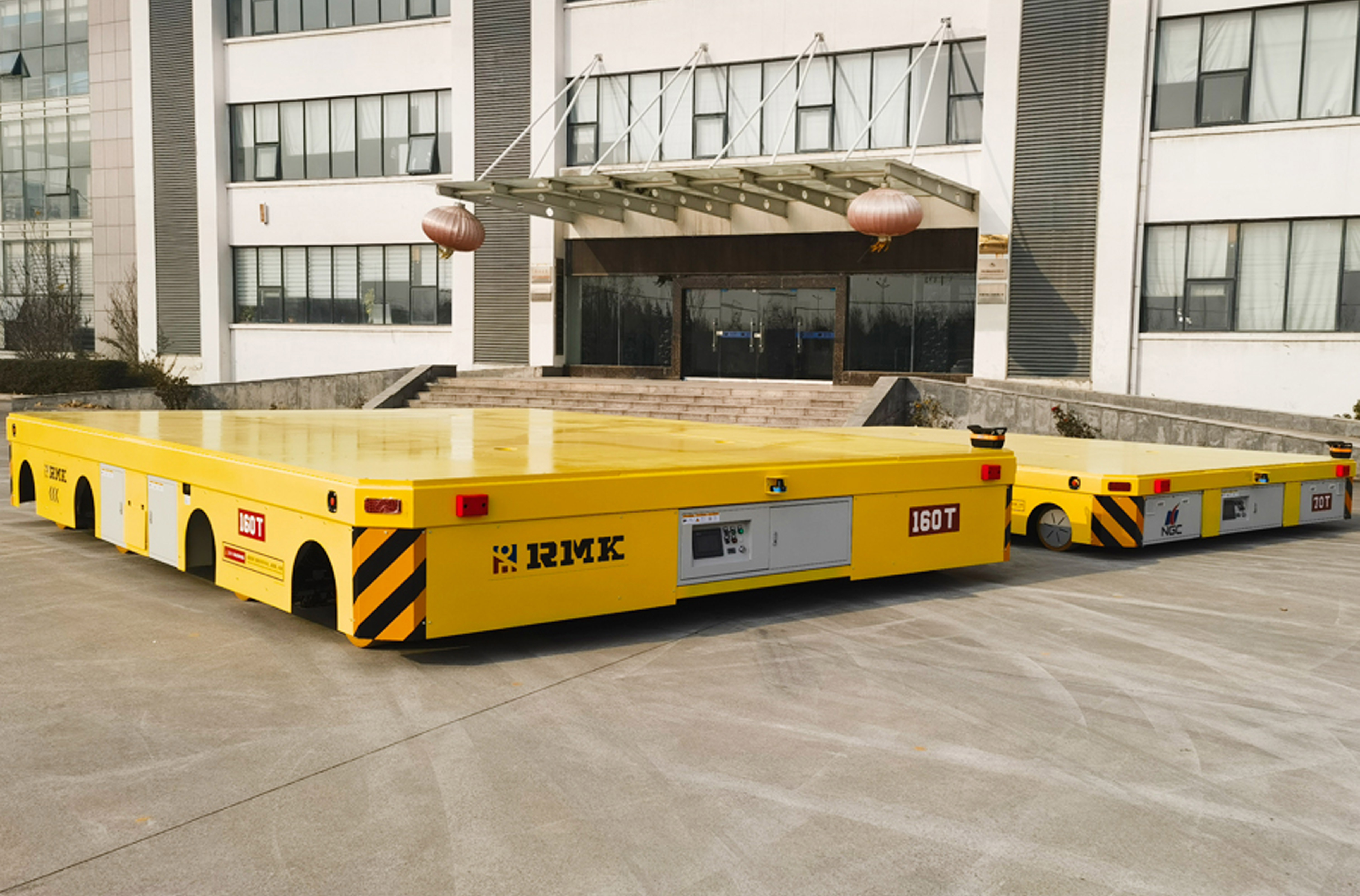
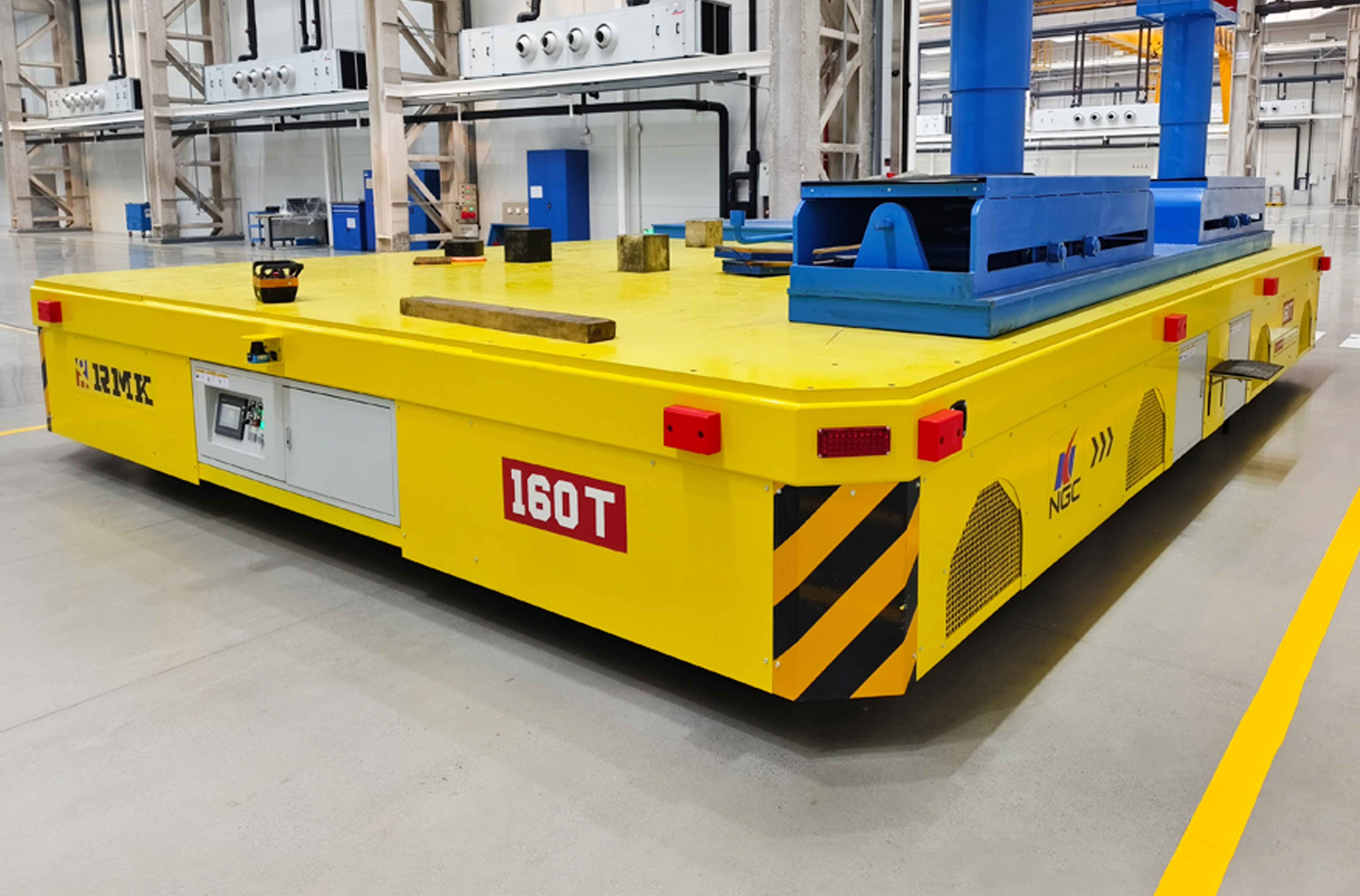
The specific equipment configuration must be evaluated according to the load weight, center of gravity, floor load-bearing capacity, and travel routes.
Case Study 2: 50-Ton Explosion-Proof Rail Transfer Cart
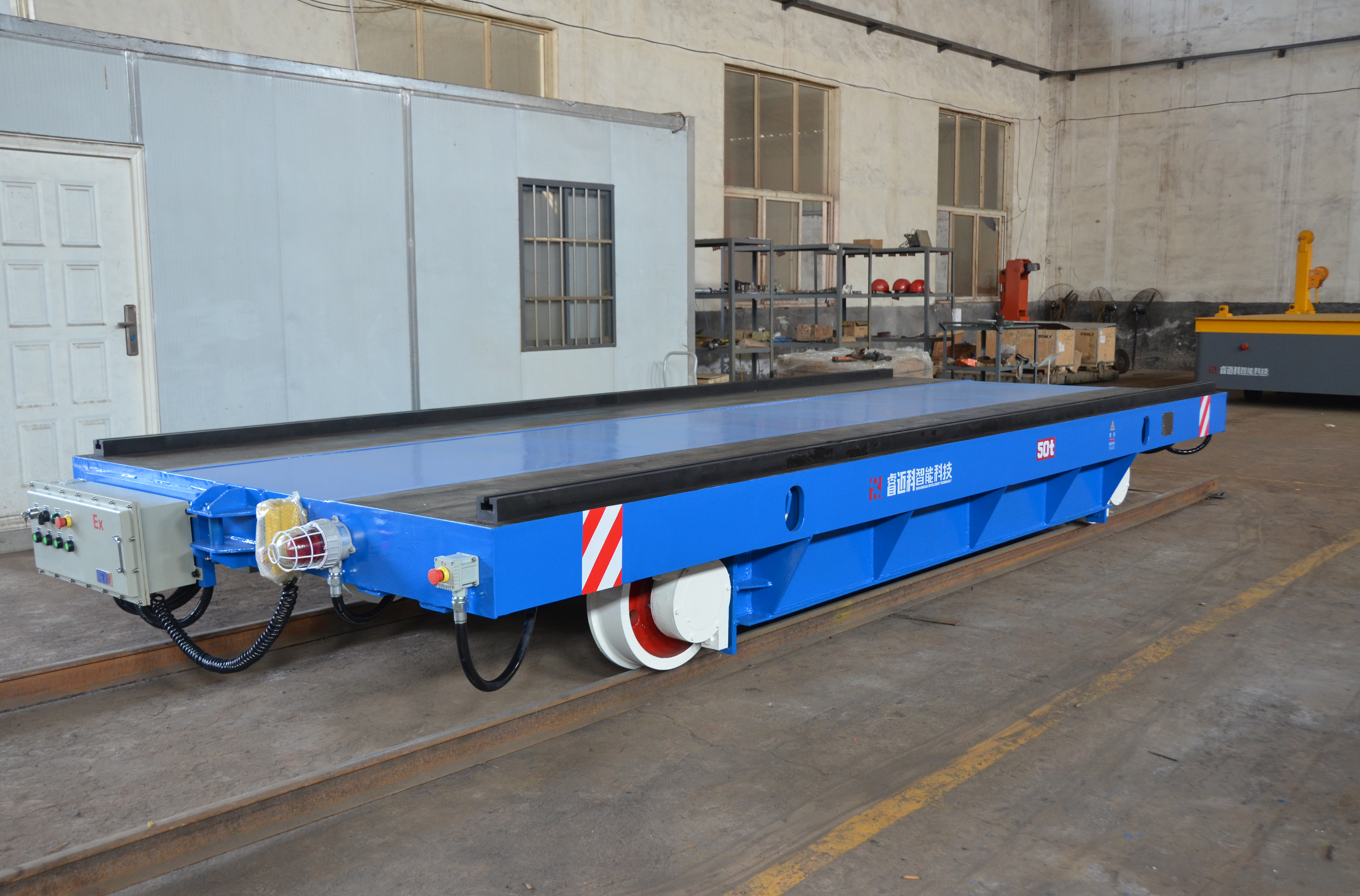
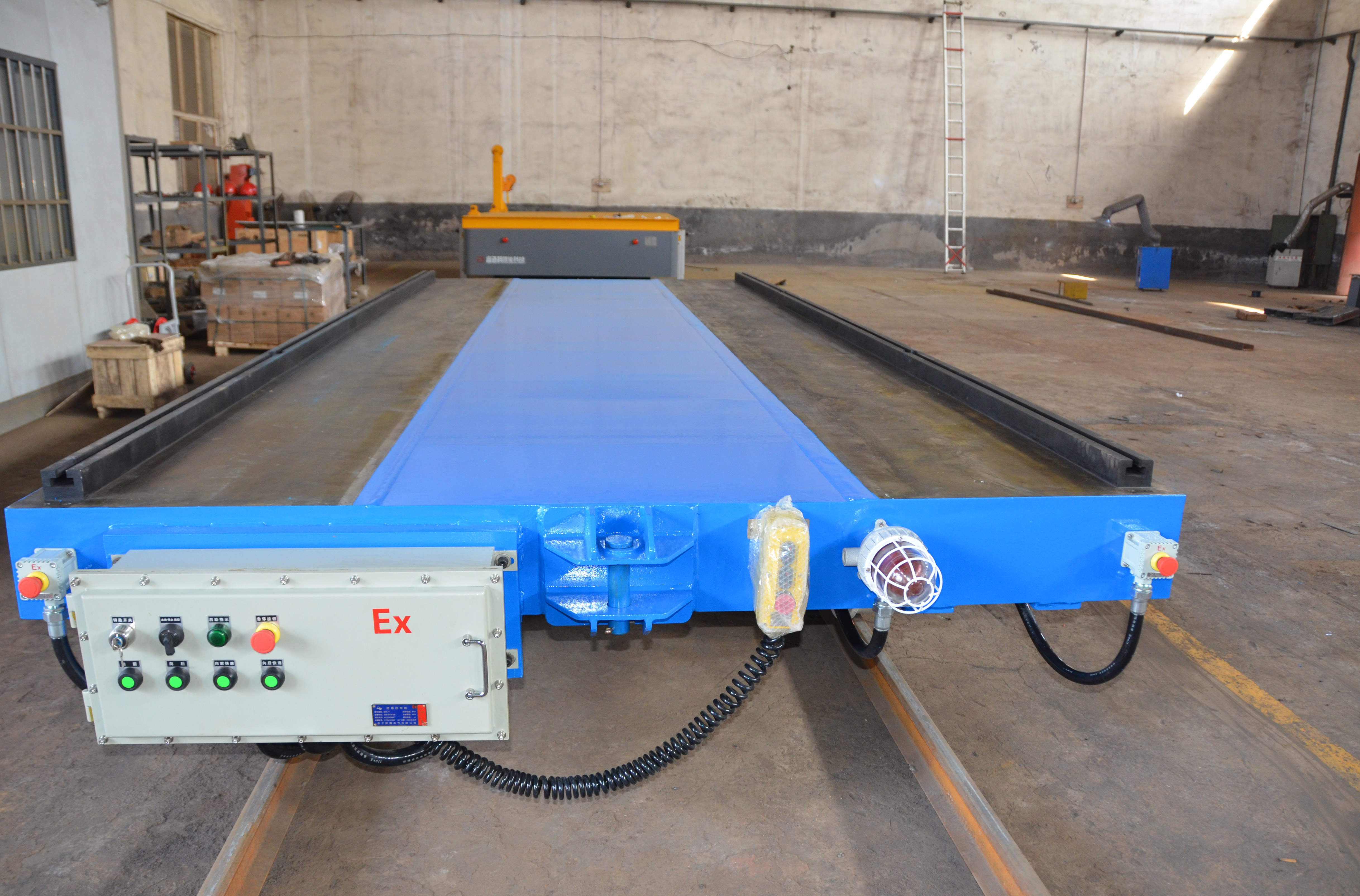
The design of an explosion-proof rail transfer cart requires particular attention to the electrical system, drive configuration, control system, and other components that may affect the explosion protection and overall safety of the vehicle.
Whether the equipment meets the explosion-protection requirements of a specific project must be verified against the actual design documentation and applicable certification or conformity assessment documents.
Important Note: Explosion-protection ratings, certification scope, and applicable operating conditions must be verified against the official technical documentation for the relevant project. They should not be determined solely from the equipment name.
Frequently Asked Questions
What Is the Main Difference Between an Industrial Transfer Cart and a Forklift?
-
Forklift uses forks to lift, stack, and transport materials. Its load capacity varies depending on the model and application.
Industrial transfer carts are primarily designed for horizontal material transportation within factories. REMARKABLE's electric transfer carts cover rated load capacities ranging from 1 to 500 tons.
For large workpieces, heavy components, and materials requiring specialized support structures, customized transfer carts may be a more suitable solution.
These two types of equipment serve different material handling purposes. The appropriate choice depends on the loading and unloading methods, material characteristics, and actual transportation requirements.
How Much Weight Can an Industrial Transfer Cart Carry?
-
The rated load capacity of an industrial transfer cart depends on its frame structure, wheel configuration, drive system, load distribution, and operating conditions.
Equipment selection should not be based solely on the weight of the cargo. The weight of pallets, fixtures, support structures, and other accessories transported together with the cargo must also be included in the total load calculation.
The required load capacity and corresponding vehicle configuration must be verified by the engineering team according to the specific project conditions.
How Should Battery Capacity Be Evaluated?
-
Battery capacity should be evaluated according to the actual operating cycle, including:
Cargo weight;
One-way and round-trip travel distances;
Number of starts and stops;
Daily operating hours;
Floor rolling resistance and gradients;
Available charging time.
When comparing battery solutions from different suppliers, buyers should consider battery voltage (V), capacity (Ah), and energy (kWh), and request clearly defined operating conditions for performance testing rather than comparing Ah ratings alone.
How Should Transfer Carts Be Selected for Workshops with Explosion-Proof Requirements?
-
First, identify the hazardous area classification, the type of explosive atmosphere or hazardous substance, and the applicable explosion-protection requirements at the site.
Then evaluate the vehicle's electrical system, mechanical structure, and relevant safety configurations according to these conditions.
An individual explosion-proof component does not mean that the entire vehicle meets the applicable explosion-protection requirements. The overall vehicle design and relevant certification or compliance documentation must be verified.
For explosion-proof automated transfer carts, the suitability of navigation sensors, communication equipment, and other electrical components for the classified hazardous environment must also be evaluated.
Is a Rail Turntable an Additional Function of a Transfer Cart?
-
No.
Rail turntable is an independent piece of equipment within a rail transportation system. It is mainly used to change the travel direction of a transfer cart or connect different rail sections in specific track layouts.
A rail turntable is not an additional function installed on the transfer cart platform, nor is it a mandatory component of every rail-guided transportation system.
Depending on the project requirements, other track-routing solutions, such as rail switches, crossing tracks, or alternative rail configurations, may also be considered.
The final selection should be based on the rail layout, vehicle configuration, available site space, and transportation requirements.
Contact REMARKABLE for a Customized Industrial Transfer Cart Solution
Selecting the right industrial transfer cart requires a thorough understanding of your load requirements, travel routes, floor conditions, operating frequency, and production processes.
Henan Remarkable Intelligent Technology Co., Ltd. provides customized industrial material handling equipment, including rail-guided transfer carts, trackless transfer carts, heavy-duty transfer platforms, AGV systems, and RGV systems, with rated load capacities ranging from 1 to 500 tons.
To help our engineering team evaluate your requirements and recommend a suitable solution, please prepare the following information:
- Maximum cargo weight and overall dimensions;
- Cargo drawings, technical specifications, or photographs;
- Factory layout and transportation routes;
- Daily operating hours and transportation frequency;
- Floor conditions, including material, load-bearing capacity, and flatness;
- Required steering, lifting, and automation functions.
Based on the information provided, our engineering team will assess your actual operating conditions, evaluate the technical requirements, and develop a customized equipment solution tailored to your specific application.
Contact REMARKABLE today to discuss your industrial material handling requirements and get a customized transfer cart solution for your factory.
References and Safety Standards
Driverless Industrial Truck Safety: ISO 3691-4:2023 – Safety Requirements and Verification for Driverless Industrial Trucks and Their Systems
Machinery Risk Assessment: ISO 12100:2010 – Safety of Machinery: General Principles for Design, Risk Assessment and Risk Reduction
EU Machinery Safety Requirements: Machinery Directive 2006/42/EC – Essential Health and Safety Requirements for Machinery
Explosion Protection Requirements: ATEX Directive 2014/34/EU – Equipment and Protective Systems Intended for Use in Potentially Explosive Atmospheres